

The development of RO membranes has always focused on several major goals: stronger separation performance, lower energy consumption, better fouling resistance, and wider operating flexibility. Therefore, two products may both be classified as RO membranes while having very different design objectives. A residential or commercial low-pressure RO membrane may prioritize high water flux at relatively low pressure, while a seawater RO membrane must maintain reliable salt rejection under much higher osmotic pressure.
From an industry perspective, these differences are created through the combined development of membrane materials, membrane structures, and membrane-element engineering.

1.The Foundation: Material Science (Membrane & Structure)
The primary driver of difference starts at the microscopic level with the materials used.
Most modern RO membranes utilize Polyamide (PA) composite materials. This is chosen for its superior chemical stability, high desalination rate, and ability to operate under varying pressure and temperature conditions. However, the "recipe" varies significantly between manufacturers.

- The Active Layer: The separation layer is incredibly thin, which allows for high water flux (flow rate) at lower operating pressures. This efficiency is the holy grail of RO manufacturing.
- Alternative Materials: While Polyamide is standard, some specialized applications use Cellulose Acetate (CA) membranes. For example, in marine aquaculture, CA membranes are sometimes preferred for their resistance to bacterial degradation.
- Nanoparticles: Recent innovations involve adding aquaporin or other nanoparticles to the polyamide layer. This technology significantly widens the gap between price and performance, offering higher salt rejection rates at lower energy costs.
2. Structural Evolution: Why Spiral Wound Wins
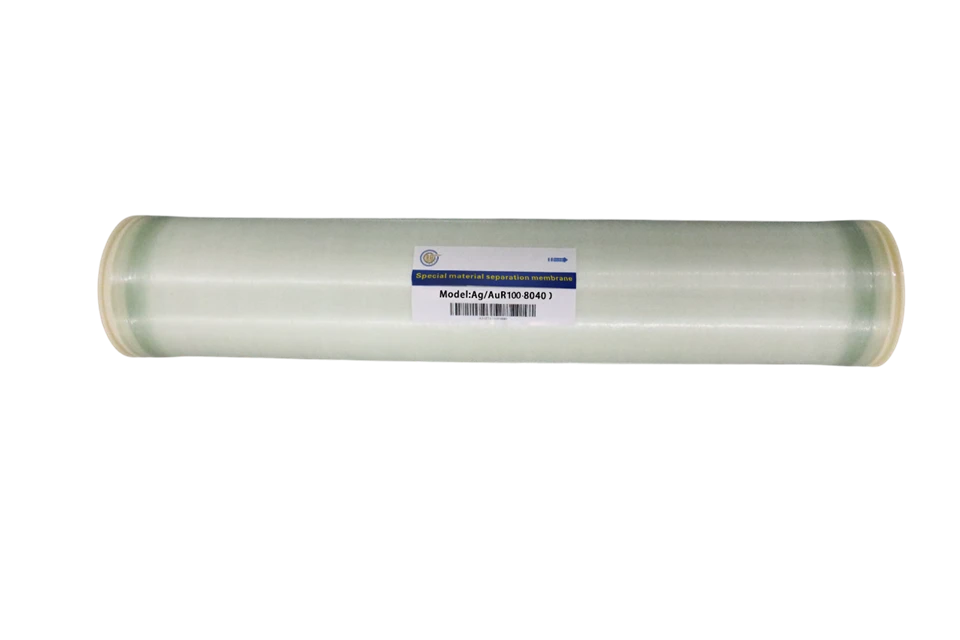
If you look at an RO system, you will likely see a Spiral Wound element. This design has become synonymous with RO for several reasons.
Surface Area vs. Cost: Spiral wound structures offer a high surface area-to-volume ratio, making them cost-effective.
Fouling Resistance: Unlike Plate-and-Frame or Tubular structures, the spiral design creates turbulent flow across the membrane surface. This turbulence minimizes fouling and scaling, making the system easier to maintain and more durable in the long run.
3. The Role of Pressure and Energy Efficiency
The difference between a "low-pressure" and a "high-pressure" membrane is formed by the chemical composition of the membrane sheet and the design of the permeate spacer.
Historically, early aromatic polyamide membranes operated at 1.5 MPa. Today, advancements have lowered this to 0.7 MPa to 1.0 MPa for standard brackish water.
- Low-Pressure Membranes: These are designed for high recovery rates and low salinity water. They save energy by reducing the load on pumps and pipes.
- High-Pressure Membranes: For seawater desalination, membranes are engineered to withstand extreme pressures (up to 8.3 MPa or even 12 MPa). These are built with denser materials to handle high salinity and industrial wastewater.
4. Performance Metrics: Rejection and Flux
The "personality" of a membrane is defined by two key metrics: Rejection Rate and Flux.
Rejection Rate: Standard polyamide membranes offer a salt rejection rate of about 99.5%. However, "High Rejection" membranes are chemically treated to achieve 99.7% to 99.8%. This difference is critical in industries like electronics manufacturing, where ultra-pure water is required.
Flux (Productivity): This is determined by the hydrophilic (water-loving) nature of the membrane surface. Manufacturers modify the surface to be more hydrophilic, allowing water to pass through faster while blocking salts.
5. Fighting the Enemy: Fouling and Oxidation
One of the biggest differences between membranes is how they handle "hostile" environments.
Anti-Fouling Technology
Fouling occurs when particles, bacteria, or organic matter clog the membrane. To combat this, manufacturers alter the membrane's surface charge and roughness.
Smooth Surfaces: Some manufacturers coat the polyamide layer with a proprietary polymer to create an ultra-smooth surface. This prevents dirt from sticking.
Neutral Charge: Negatively charged membranes attract positively charged contaminants. By creating a neutrally charged membrane surface, manufacturers reduce the attraction of these foulants, making cleaning easier.
Chlorine Tolerance
Standard polyamide membranes are destroyed by chlorine. However, some industrial processes require disinfection.
Oxidation-Resistant Membranes: Manufacturers have developed membranes that can tolerate up to 1.0 mg/L of chlorine (compared to the standard 0.1 mg/L). This is achieved through chemical modifications that protect the polyamide layer from oxidative attack.
The differences between reverse osmosis membranes are formed at the intersection of chemistry, physics, and engineering. From the nanoparticles embedded in the polyamide layer to the geometric configuration of the spacers, every detail is designed to solve a specific problem-whether that is saving energy, resisting chlorine, or producing ultra-pure water.
When selecting a membrane, don't just look at the price tag. Look at the rejection rate, pressure requirements, and fouling resistance to ensure you are choosing the right technology for your specific water source.


