

Reverse Osmosis RO System
Core strengths
Benefits of Choosing Our Reverse Osmosis (RO)System
One-Stop Water Treatment Solutions Provider
From membrane manufacturing and equipment integration to engineering design, technical support, and global delivery, we provide complete water treatment solutions in one place.
Intelligent Automation Control System
Equipped with advanced automation and intelligent monitoring technologies, our systems enable precise control, stable operation, real-time data management, and reduced operational costs.

20 Years of Deep Technology Accumulation
With 20 years of industry expertise, we continuously innovate in membrane technology, system integration, and water treatment engineering to deliver reliable and efficient solutions worldwide.
Extensive Cooperation Experience
With extensive experience in global cooperation projects, we work closely with partners across industries to deliver reliable, efficient, and customized water treatment solutions.
Our Service
Full-Process Sales and Logistics Solution
01
Sales Service
Provide product consultation, quotation support, order confirmation, and customized solution development to ensure accurate matching of customer requirements.
02
Transportation Service
Handle cargo arrangement, packaging, loading, and international logistics coordination (sea, air, or land freight), ensuring safe and timely delivery throughout the shipping process.
03
After-sales service
Offer shipment tracking, documentation support, and responsive problem-solving services, ensuring continuous assistance and reliable communication after delivery.


Advantages of Reverse Osmosis RO System
The first step of an RO system is a sediment filter to remove the big stuff like rust, dirt and other solid particles. This step alone makes a huge difference because it clears up the cloudiness and discoloration.
After the sediment filter, the carbon filter kicks some serious chlorine booty.Municipal treatment centers love adding chlorine and other chemical disinfectants to their water. These chemicals were found in the water supplies serving over 250 Million households.
The public water system is a minefield of dangerous pollutants like arsenic, pesticides, lead and nuclear waste.These compounds have no place in your family's drinking water, yet they're flowing through taps across the country.The RO filter, however, does the real heavy lifting.
The remineralization process also alkalizes the water and balances pH. Although more research is needed, early studies suggest that alkaline water (pH 8.5-9) may reduce the risk of high blood pressure, acid reflux and diabetes.
By the time water exits an RO system, it tastes mmmm, mmmm good!The sediment filter removes discoloration, the carbon filter removes stanky chlorine, the ion exchange resins soften the water, and the RO membrane removes nuclear waste.
Product Specification
We offer the following Product specifications:
|
S. No |
Description of the RO Components |
RO Plant Specifications depending upon capacity |
|
1. |
Raw Water Feed Pump |
220 V, Single phase |
|
1 |
||
|
2. |
Pressure Sand Filter or PSF (Capacity below 500 LPH) |
1500 L/h |
|
1.5 kg/cm2 |
|
S. No. |
Parameter |
Specification |
|
1 |
Purification capacity |
100±20* Litres per hour * |
|
2 |
Max Duty Cycle |
500-700 litres per day |
|
3 |
Membrane |
3 No’s |
|
4 |
RO Membrane |
300 GPD (3 units) |
|
5 |
Solenoid Valve |
220 V |
|
6 |
Minimum Inlet Water Pressure |
0.3 kg/sq. cm |
|
7 |
Maximum Inlet water Pressure |
2 kg/sq. cm |
|
8 |
Input Voltage |
160-300V AC ( 50Hz) |
|
9 |
Operating Voltage |
24V DC |
|
10 |
Input water Temperature |
Min 5 Celsius & Max 50 Celsius |
|
11 |
Total Dissolved Solids (TDS) |
Up to 2000 ppm |
|
12 |
Total Hardness |
500 ppm (max) |
|
13 |
Rejection of TDS |
Up to 95% |
|
14 |
Recovery |
Up to 25% |
|
15 |
Dimensions (mm) |
W 550 x D 300 x H 900 |
|
16 |
Net Weight |
32 kgs. |
|
17 |
Power rating |
250 W |
Application of Reverse Osmosis RO System
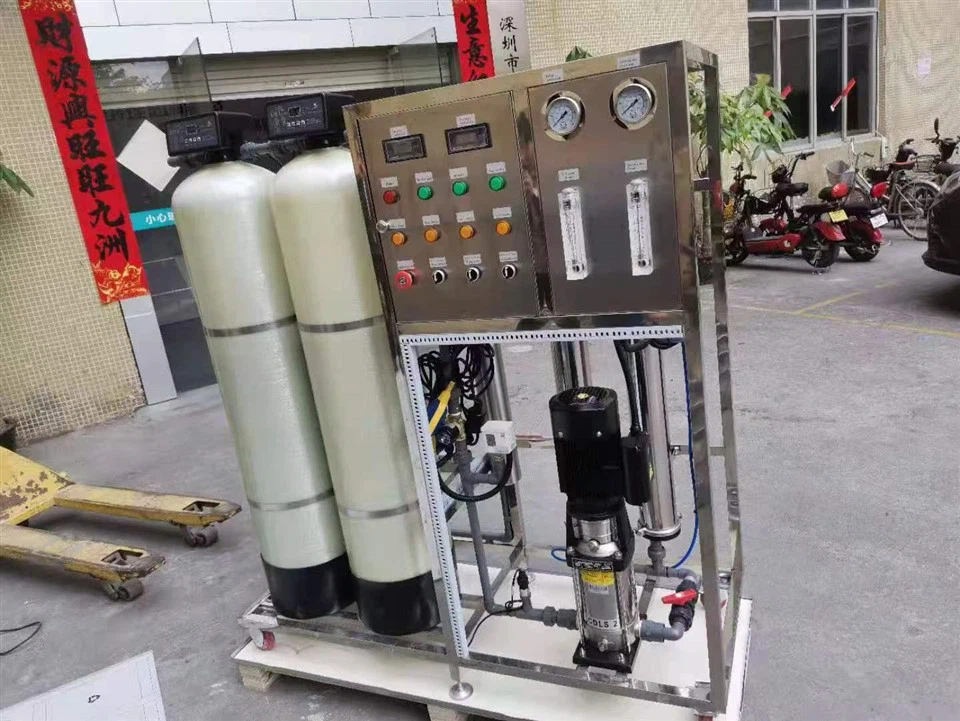
Residential Under-Sink Filtration
Ideal for providing purified drinking water directly from your kitchen tap, removing contaminants that may be present in municipal water supplies.

Whole-House Systems
In larger configurations, RO systems can provide clean water throughout the home, ensuring safe water for drinking, cooking, and bathing.
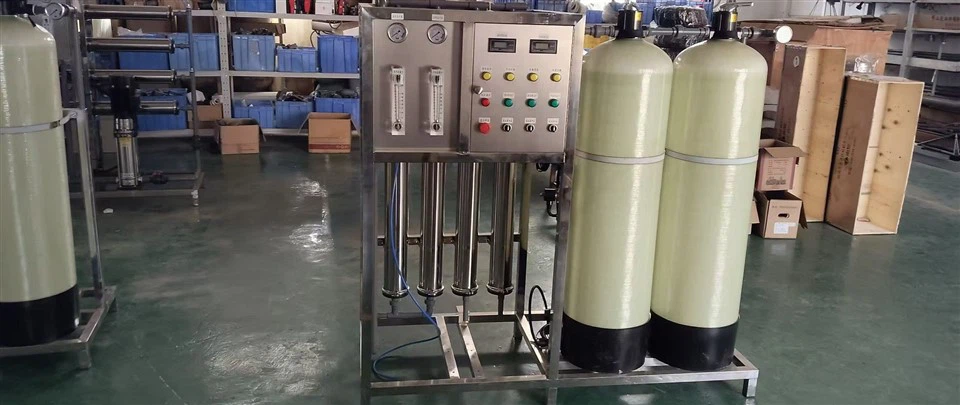
Commercial and Industrial Applications
RO systems are frequently used in businesses, restaurants, and industrial facilities to provide high-quality water for cooking, food processing, or equipment operation.

Medical and Laboratory Settings
RO systems are essential in environments where ultrapure water is required, such as in dialysis, laboratory experiments, and pharmaceutical manufacturing.
Process of Reverse osmosis RO system
Pre-treatment Stage
The process begins with pre-filters, including sediment filters that remove larger particles like sediment, chlorine, and organic matter, which could damage or clog the RO membrane. This initial step ensures that the water is adequately prepared for the more detailed filtration to come.
Reverse Osmosis Filtration
High pressure is applied to the water at this core stage, pushing it through the semipermeable membrane. This membrane, the critical component of the system, features tiny pores (about 0.0001 microns) that allow only water molecules to pass while effectively blocking and removing a significant amount of dissolved salts, chemicals, and microorganisms. The purified water, termed the permeate, is then collected in a storage tank for later use.
Wastewater Disposal
The concentrated contaminants, which do not pass through the semipermeable membrane, are expelled as wastewater or "brine." This step involves a flow restrictor and drain system that manages water flow through the membrane, maintaining efficiency and preventing the membrane from becoming overwhelmed by pressure. Typically, this process generates about 3-4 gallons of wastewater for every gallon of purified water, which is then properly drained away.
Storage And Delivery
The processed water is stored in the storage tank until needed. When there is a demand for water, it is delivered through a dedicated faucet, providing clean, safe drinking water on demand. This system ensures that purified water is available instantly whenever required by the user.
Post-treatment Stage
On demand, water from the tank passes through a post filter on the way to the faucet, providing a fresh pass through carbon to remove any residual taste.
Our Certifications


FAQ
We're professional reverse osmosis ro system manufacturers and suppliers in China, specialized in providing high quality customized service. We warmly welcome you to wholesale reverse osmosis ro system for sale here from our factory. For price consultation, contact us.
bulk purchase of reverse osmosis system, agricultural water treatment system, water treatment for mold removal