


Products Description
Acid recovery purification membranes are advanced membrane separation solutions designed for recovering valuable acids from industrial waste acid streams.By selectively allowing acid molecules to pass while retaining metal ions and impurities, the membrane helps industries reduce acid consumption, minimize chemical waste, and improve resource utilization.
It is widely used in metal surface treatment, pickling lines, electroplating, hydrometallurgy, and chemical manufacturing industries.

What Is an Acid Recovery Purification Membrane?
Acid recovery purification membrane is a specialized membrane used to separate free acid from dissolved metal ions, suspended impurities, and contaminants in spent acid solutions.
Spent Acid → Membrane Separation → Recovered Acid + Concentrated Metal Solution
The membrane uses selective permeability. Acid molecules and water molecules can pass through, while metal ions and larger charged particles are retained.
How Does Acid Recovery Membrane Technology Work?

Step 1: Feed Acid Solution Enters the System
Waste acid from industrial processes is pretreated to remove suspended solids, oil, and other substances that may damage the membrane.
Step 2: Selective Separation of Acid and Metal Ions
Acid molecules pass through the membrane, while metal ions such as Fe²⁺, Ni²⁺, and Zn²⁺ are retained.
Step 3: Reuse Recovered Acid
The recovered acid can be reused in production processes, extending acid bath life and reducing waste disposal costs.
Specifications
|
Model |
Effective Membrane Area ft² (m²) |
Daily Permeate Flow (m³/d) |
Stable Rejection Rate(%) |
Operating Pressure (PSI) |
|
PACT100-8040 |
400(37.2) |
3.6 |
≥90.00 |
360 |
|
PACT100-4040 |
80(7.4) |
0.9 |
≥90.00 |
360 |
Standard Testing Conditions
|
Testing Conditions |
Temperature(℃) |
pH value |
Recovery rate(%) |
Maximum feedwaterSDI |
|
15% Phosphoric acid (Aluminum ion concentration: 4g/L) |
25±5 |
0.97 |
15±5 |
5 |
Industrial Applications
Metal Surface Treatment
Used for hydrochloric acid, sulfuric acid, and nitric acid recovery.

Titanium Dioxide Production
Recovers acid from titanium processing wastewater.
Steel Pickling Industry
Separates iron ions from hydrochloric acid for reuse.
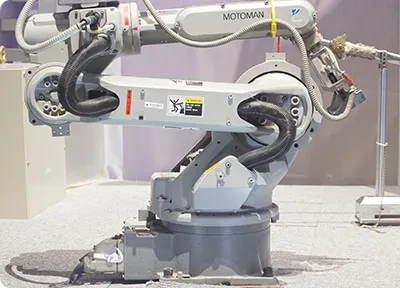
Hydrometallurgy Industry
Used for metal recovery and acid purification.
Q&A
Q: Why must suspended solids be controlled at ≤1 mg/L? What happens if the level is too high?
A: Excess suspended solids can clog the membrane flow channels and accumulate on the membrane surface, leading to higher operating pressure, reduced permeate flow, and irreversible fouling. Proper filtration before the membrane system is essential.
Q: Why must oxidants (such as free chlorine or persulfates) be kept below ≤0.1 mg/L?
A: Oxidants can react with ions or functional groups embedded in the membrane material, causing structural damage or deterioration in performance. This oxidative damage is irreversible, and severe cases may require membrane replacement. Therefore, all oxidants must be removed or neutralized during pretreatment.
Q: Why should organic solvents be limited to ≤0.1 mg/L? What risks do they pose?
A: Organic solvents can swell or dissolve the membrane material, resulting in structural failure or a significant drop in ion rejection. In extreme cases, the membrane may rupture. For this reason, any feedwater containing organic solvents must be strictly pretreated.
Q: Why do oil and petroleum compounds need to be controlled below ≤0.5 mg/L?
A: Oils readily form a dense film on the membrane surface, severely blocking water passage and creating difficult-to-remove fouling. This type of contamination is often irreversible and can drastically reduce system performance. Effective oil removal in pretreatment is crucial.
Q: Why must calcium and magnesium ions be kept at ≤10 mg/L?
A: Calcium and magnesium can form scale deposits such as carbonates or sulfates on the membrane surface, especially under high-acid or high-concentration conditions. Scaling reduces permeate flow, increases pressure, and requires frequent cleaning. Uncontrolled scaling may permanently damage the membrane.
Hot Tags: acid recovery purification membrane, China acid recovery purification membranemanufacturers, suppliers, factory


