

Can a Reverse Osmosis Membrane Remove Heavy Metals?
Yes.
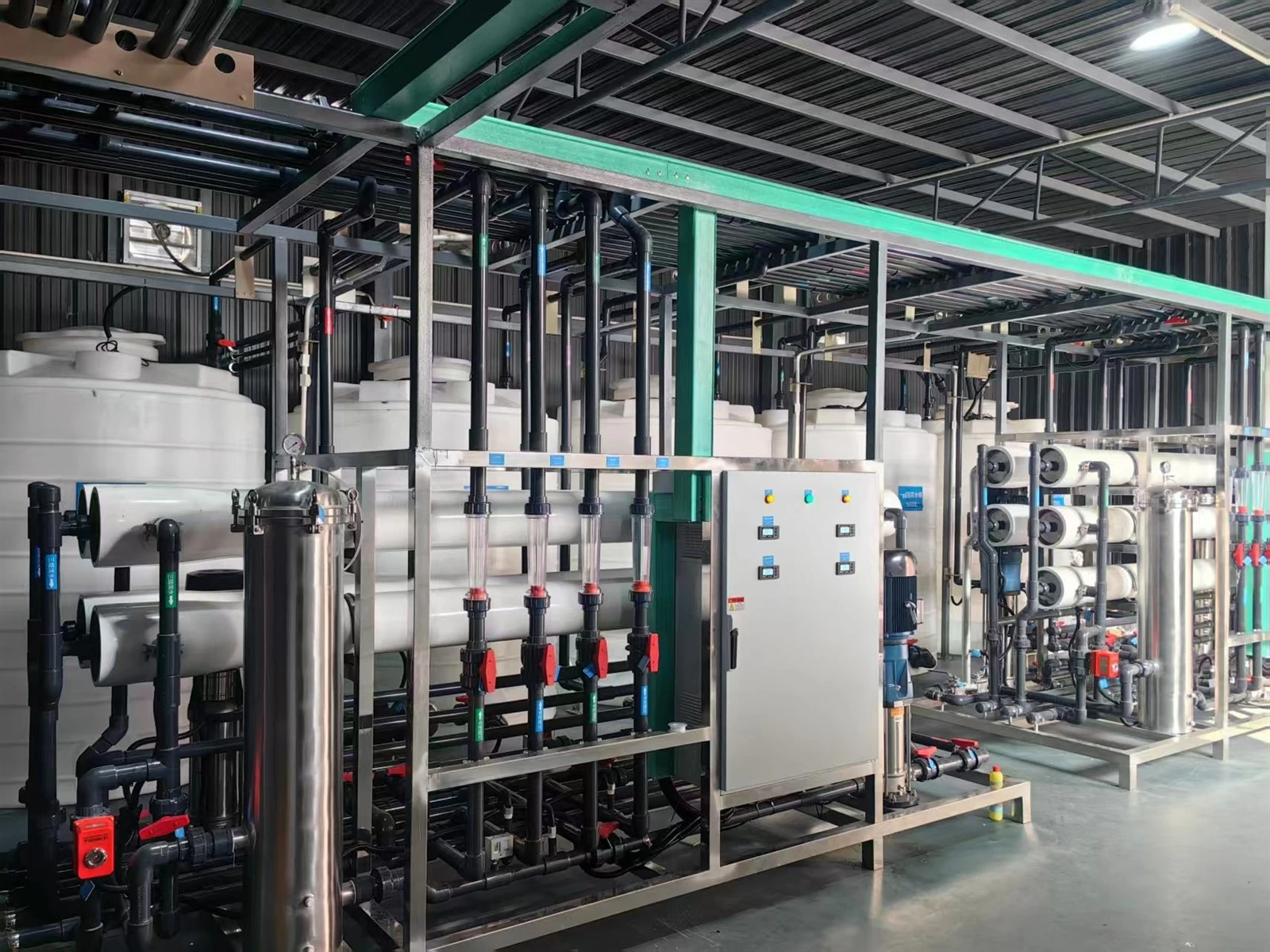
A reverse osmosis (RO) membrane can significantly reduce many dissolved heavy metals in drinking water, including lead, cadmium, and chromium. It can also help reduce copper and arsenic, although arsenic is technically a metalloid rather than a heavy metal. The important word is reduce. For household membrane elements, it is not realistic to expect 100% removal of every metal. Actual performance changes with the type of contaminant, the chemistry of the water, and the condition of the system. By contrast, industrial membrane systems can achieve much deeper removal because they usually rely on multiple water-treatment steps, such as pretreatment, targeted metal-removal processes, and then a downstream RO system as part of a complete treatment or metal-recovery line.(As shown in the image on the left, the complete metal recovery system (using specialized silver recovery membrane elements) also incorporates a reverse osmosis (RO) membrane system in its downstream treatment stage.)
Heavy metals may enter water through natural rock deposits, industrial pollution, or plumbing materials. Lead, for example, can come from pipes and fittings even when the water leaving a treatment plant meets quality standards. These substances are often impossible to detect by taste, smell, or appearance. A clear glass of water is therefore not proof that it is free of metals. Testing the water and choosing a treatment method that matches the result are the most reliable starting points.
How Does a Reverse Osmosis Membrane Remove Heavy Metals?
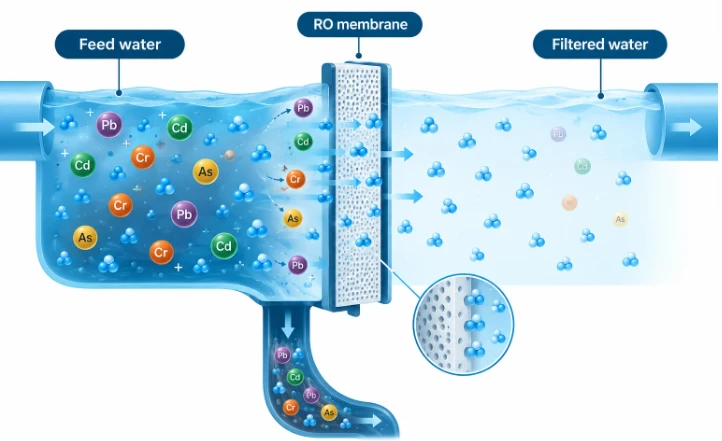
Reverse osmosis uses pressure to push water through a thin, semipermeable membrane. Water molecules pass into a treated-water stream, while much of the dissolved salt and many metal ions stay on the feed-water side. The concentrated contaminants then leave through a separate reject-water stream. Unlike a basic sediment filter, which mainly traps visible particles, an RO membrane can reduce substances already dissolved in the water. Its separation depends on several factors, including the size, charge, and chemical form of the dissolved substance.
A household RO unit normally contains more than a membrane. A sediment prefilter catches grit and rust, while a carbon prefilter can reduce chlorine and other substances that may damage certain membranes. The RO membrane handles much of the dissolved contamination, and a final filter may improve taste before water reaches the dedicated faucet. A poorly maintained prefilter can shorten membrane life, while a damaged membrane may allow more dissolved material into the finished water. Installing a system correctly and replacing parts according to its instructions matter as much as selecting the membrane itself.

Which Heavy Metals Can RO Reduce?
Lead is one of the clearest examples. Properly designed RO systems can reduce dissolved lead at the drinking-water tap, making them a useful option in homes with lead-related plumbing concerns. Cadmium and chromium can also be reduced by systems designed and certified for those contaminants. Chromium may occur in different chemical forms, including trivalent chromium and hexavalent chromium; their behavior is not identical. Copper is another metal that RO can reduce, although small amounts of copper are also naturally present in some drinking water. The CDC's guidance on home water treatment identifies lead, copper, and chromium among chemicals that RO can remove or reduce.
Arsenic needs special attention because its chemical form changes the result. In water, arsenic commonly occurs as arsenic(V), called arsenate, or arsenic(III), called arsenite. RO membranes generally reject arsenate more effectively than arsenite, which can be difficult to remove at typical drinking-water pH. Some supplies therefore need professionally designed pretreatment before RO. Do not assume that a system advertised for arsenic removal treats both forms equally. If a private well contains arsenic, ask the testing laboratory or water-treatment specialist whether arsenic speciation is needed. The goal is a suitable treatment plan, not just a filter with an impressive claim on its box.
What Affects Heavy Metal Removal-and How Can You Verify It?
Actual removal depends on the membrane's condition, operating pressure, incoming water quality, and maintenance. High mineral content can contribute to scaling, while sediment, iron, or other deposits can foul the membrane. Low water pressure may reduce production and affect performance. Feed-water temperature and the concentration of dissolved substances also influence results. If the membrane is torn, improperly seated, or overdue for replacement, untreated water may bypass the barrier. Advertised removal rates are not permanent guarantees.
Before installation, have the water tested by a qualified laboratory for the contaminants you suspect. After installation, test the treated water again to confirm that the system meets your needs. A handheld TDS meter can indicate a change in the water's overall dissolved mineral content, but it cannot tell you how much lead or arsenic is present. Follow the manufacturer's filter and membrane replacement schedule, inspect the unit for leaks, and retest after significant changes to the water supply. If a test shows unsafe metal levels, use a verified safe drinking-water source until effective treatment is confirmed.
RO also has trade-offs: it sends some incoming water to drain and removes beneficial minerals such as calcium and magnesium alongside unwanted substances. An under-sink system treats water at that faucet, not every tap in the house. Still, for households facing confirmed dissolved-metal contamination, a correctly selected and maintained RO system can provide an important layer of protection.
The answer is yes: a reverse osmosis membrane can remove many heavy metals from water-but proven contaminant-specific performance and follow-up testing are what make that answer useful.