


Reverse osmosis (RO) is a pressure-driven membrane separation process. Unlike ordinary filtration, which mainly relies on gravity or relatively low pressure, RO needs sufficient hydraulic pressure to force feed water through a semi-permeable membrane. At the same time, the applied pressure must overcome the osmotic pressure of the feed water and provide enough net driving force for water to pass through the RO membrane.
This is the fundamental reason why a high-pressure pump exists in many reverse osmosis membrane systems.
In an industrial RO system, the pump also needs to provide a stable feed flow so that the membrane surface maintains suitable cross-flow conditions while permeate is continuously produced. Technical descriptions of industrial RO systems similarly identify pumps and pressure-control components as core parts of the system, with the high-pressure pump traditionally providing the driving force for separation.
Why Does an RO Membrane System Need a High-Pressure Pump?
The key concept is osmotic pressure. When water contains dissolved salts and other substances, there is a natural tendency for water to move toward the side with a higher concentration. RO works in the opposite direction: pressure is applied to the concentrated feed side so that water is forced through the membrane while most dissolved salts remain in the concentrate stream.
Therefore, the operating pressure must be sufficiently high to overcome osmotic pressure and the resistance of the membrane and system piping. As feed-water salinity increases, osmotic pressure also increases, which means the required operating pressure generally becomes higher. For example, brackish-water RO systems normally operate at substantially higher pressure than ordinary tap-water systems, while seawater RO requires much higher pressure because of the high salt concentration of seawater.
This explains why a high-pressure pump is particularly important in industrial RO applications. If the feed pressure is too low, the membrane may still allow some water to pass, but permeate production can decrease significantly and salt rejection may also suffer. In practical system design, the pump must therefore be selected according to membrane specifications, feed-water TDS, temperature, required flow, recovery rate and system pressure losses rather than simply choosing a pump with a high pressure rating.
Which RO Systems Need a High-Pressure Pump?
Not every RO system requires the same type of high-pressure pump.
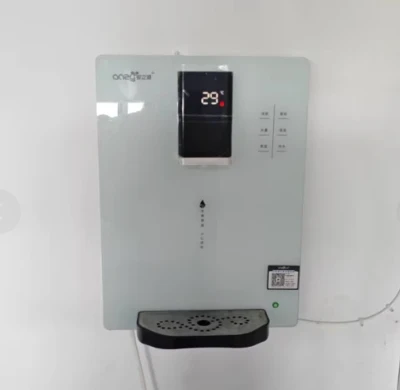
Small residential RO systems are a good example. If the incoming municipal water pressure is already sufficient for the membrane, an additional high-pressure pump may not be necessary. Many household RO systems, however, use a small booster pump when the inlet pressure is too low. In this situation, the pump is essentially compensating for inadequate feed pressure rather than creating the very high pressures associated with industrial desalination.
Commercial and industrial RO systems are different. When the feed water contains a relatively high concentration of dissolved salts, or when the system needs a substantial production capacity, the available water pressure is normally insufficient to provide the required net driving pressure. A dedicated high-pressure pump is therefore commonly installed before the membrane vessels.
Brackish-water RO systems generally require significantly more pressure than conventional tap-water RO. Seawater RO requires even higher pressure because seawater has a much higher osmotic pressure; commercial seawater systems commonly operate in the range of roughly 55–70 bar, although actual design pressure depends on feed salinity, temperature, recovery and membrane specifications.
There are also specialized low-pressure RO membranes and system configurations that can operate at lower pressures. In these systems, the pump requirement may be reduced. Some advanced industrial configurations separate the functions of circulation and pressurization, allowing a circulation pump to provide cross-flow while another device supplies the pressure needed to drive permeate production.
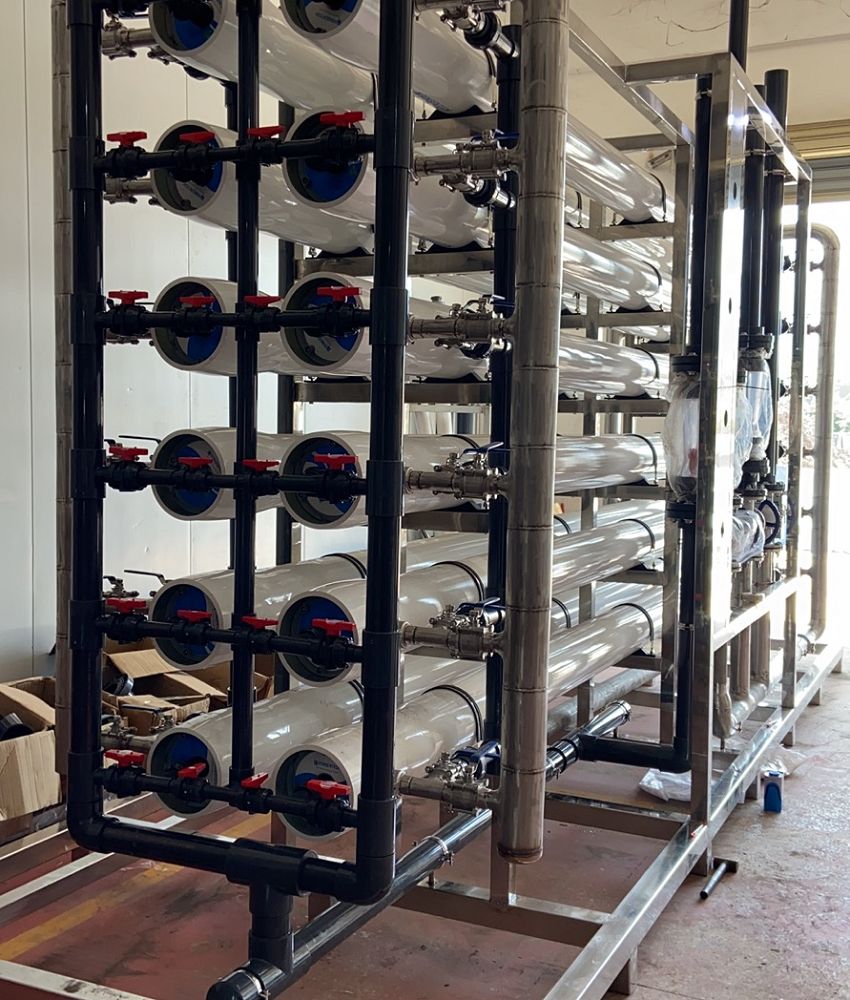

A practical example can be seen in a pure water treatment project in Heyuan using the YIME-MP-BW-8040(FR) industrial RO membrane.
In this type of system, the RO membrane is responsible for the separation process, but the membrane itself does not generate pressure. Pretreated feed water first passes through the necessary filtration and protection stages before entering the high-pressure section. The high-pressure pump then raises the feed water to the pressure required by the BWRO membrane and continuously sends it into the membrane pressure vessels.
This creates the pressure difference that allows water to permeate through the membrane while concentrating the dissolved salts and other retained substances on the concentrate side.
The pump therefore plays several connected roles. First, it provides the driving pressure required for RO separation. Second, it maintains a relatively stable feed flow to the membrane elements, which is important for consistent system operation. Third, it supports the designed permeate production rate. If the pump cannot maintain the required pressure and flow, the RO membrane may not operate under its intended conditions even if the membrane itself is technically capable of achieving a high rejection rate.
For the Heyuan pure water system, the high-pressure pump should therefore be considered as part of the overall membrane process rather than an independent auxiliary component. The performance of the YIME-MP-BW-8040(FR) membrane, pretreatment system, pressure vessels, piping, valves and pump must work together. Pump selection and operating pressure should ultimately follow the actual feed-water analysis and the membrane manufacturer's recommended operating conditions.
This is also why simply increasing pump pressure is not a good solution. Excessive pressure can increase energy consumption, place additional stress on equipment and potentially exceed the allowable operating conditions of the membrane or pressure vessel. A properly designed RO system aims for the pressure required by the process, not the highest pressure that the pump can produce.
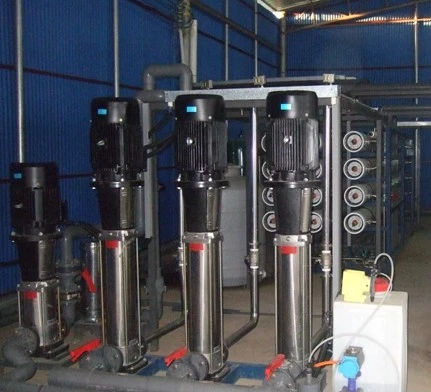
Why Are Vertical Multistage Centrifugal Pumps Common in RO Projects?
Among the pumps used in industrial RO projects, the vertical multistage centrifugal pump is a common choice, particularly where continuous operation, stable pressure and compact equipment layout are important.
Its basic principle is straightforward. Several impellers are arranged in stages within the same pump. Each stage contributes additional pressure, allowing the pump to achieve a higher discharge pressure without requiring an extremely large single-stage impeller.
This configuration is well suited to many industrial RO applications because the system needs both sufficient pressure and a relatively stable flow. Vertical construction can also reduce the equipment footprint, which is useful when the RO skid or water treatment plant has limited installation space.
In practice, the pump should be selected according to the required flow rate and pressure rather than by pump type alone. Factors such as feed-water quality, temperature, material compatibility, motor power, efficiency, NPSH requirements and continuous operating conditions also need to be considered. For water treatment applications, the wetted materials should be compatible with the feed water and the expected operating environment.
A well-selected vertical multistage centrifugal pump can provide a practical balance between pressure capability, flow stability, footprint and operating reliability. For larger or more demanding RO systems, other pump technologies, including positive-displacement pumps, may also be appropriate depending on pressure, flow and application requirements.
The high-pressure pump is one of the key components that turns the RO membrane from a filtration element into a functioning separation process. Its job is to provide the pressure and flow needed to overcome osmotic pressure, drive water through the membrane and maintain stable operating conditions.