

In modern water treatment technology, reverse osmosis (RO) systems have become one of the core processes for producing high-purity water. Among them, the RO 8040 membrane is widely used due to its suitability for large-scale industrial water treatment applications.
From practical project experience, it is clear that the stable operation of an RO system does not rely solely on the performance of the membrane element itself. As an RO 8040 membrane supplier, we understand more clearly that a complete and reliable system must also be equipped with various key auxiliary components.
These different categories of accessories each play their own role in the RO system, jointly ensuring stable operation and continuous high-efficiency water production.
Membrane Accessories
External membrane accessories are mainly used for support, sealing, monitoring, and controlling the operating status of the entire RO 8040 system, and are key components for ensuring system stability and safety.
The pressure vessel (membrane housing) is the protective shell of the RO 8040 membrane, used to contain and secure the membrane element while withstanding the high pressure generated during system operation.
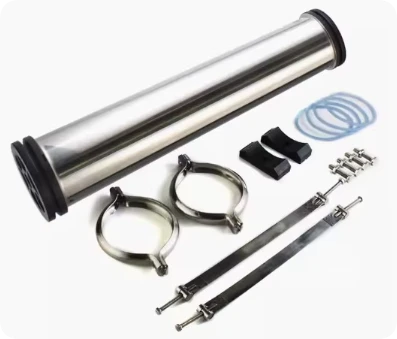
High-quality membrane housings are typically made of fiberglass reinforced plastic (FRP) or stainless steel.
FRP housings are lightweight, corrosion-resistant, and cost-effective, making them widely used in industrial RO systems;
while stainless steel housings offer higher mechanical strength and durability, making them more suitable for high-pressure or highly corrosive water treatment environments.
In practical selection, the membrane housing must fully match the RO 8040 membrane dimensions, and the inlet/outlet structure must be properly designed to ensure smooth water flow and reliable sealing.
Improper matching or poor sealing of the housing may lead to reduced system efficiency or even damage to the membrane element.
Although O-rings are small in size, they play a crucial role in the external sealing system.They are mainly used for sealing between the membrane element and housing, as well as housing connection points, preventing raw water leakage or bypass.
O-rings are typically made of EPDM or Viton materials.Viton offers stronger resistance to high temperature and chemical corrosion, making it suitable for complex industrial environments;while EPDM is more suitable for standard water treatment systems and offers good cost performance.
The condition and installation quality of O-rings directly affect product water quality; failure may result in raw water mixing into the permeate system.
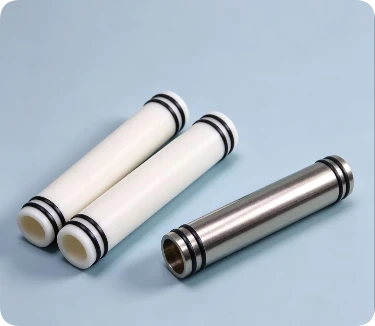
The connector is an important component in the RO 8040 system used to connect the membrane element with the housing and piping.
Its main function is to ensure reliable connection and sealing of the permeate channel, allowing purified water to be smoothly discharged from the membrane and transported to downstream piping systems.
This component is usually made of corrosion-resistant materials such as PVC or stainless steel to ensure structural strength and chemical stability during long-term operation.
The connector design must match the housing interface and permeate flow rate to avoid leakage, back pressure, or flow restriction issues.
Pressure gauges are important monitoring devices in RO systems, used to reflect real-time operating conditions.By monitoring feed pressure and differential pressure across the membrane housing, operators can assess membrane fouling, system blockage, and operational abnormalities.
Changes in pressure data provide important references for maintenance, enabling preventive management and extending the service life of the RO 8040 membrane.
Flow meters are used to monitor feed, permeate, and concentrate flow rates, and are essential tools for determining whether the system operates under design conditions.Common types include electromagnetic flow meters, turbine flow meters, and rotameter flow meters, each suitable for different water qualities and accuracy requirements.
Accurate flow data helps optimize system efficiency and ensure stable product water quality.
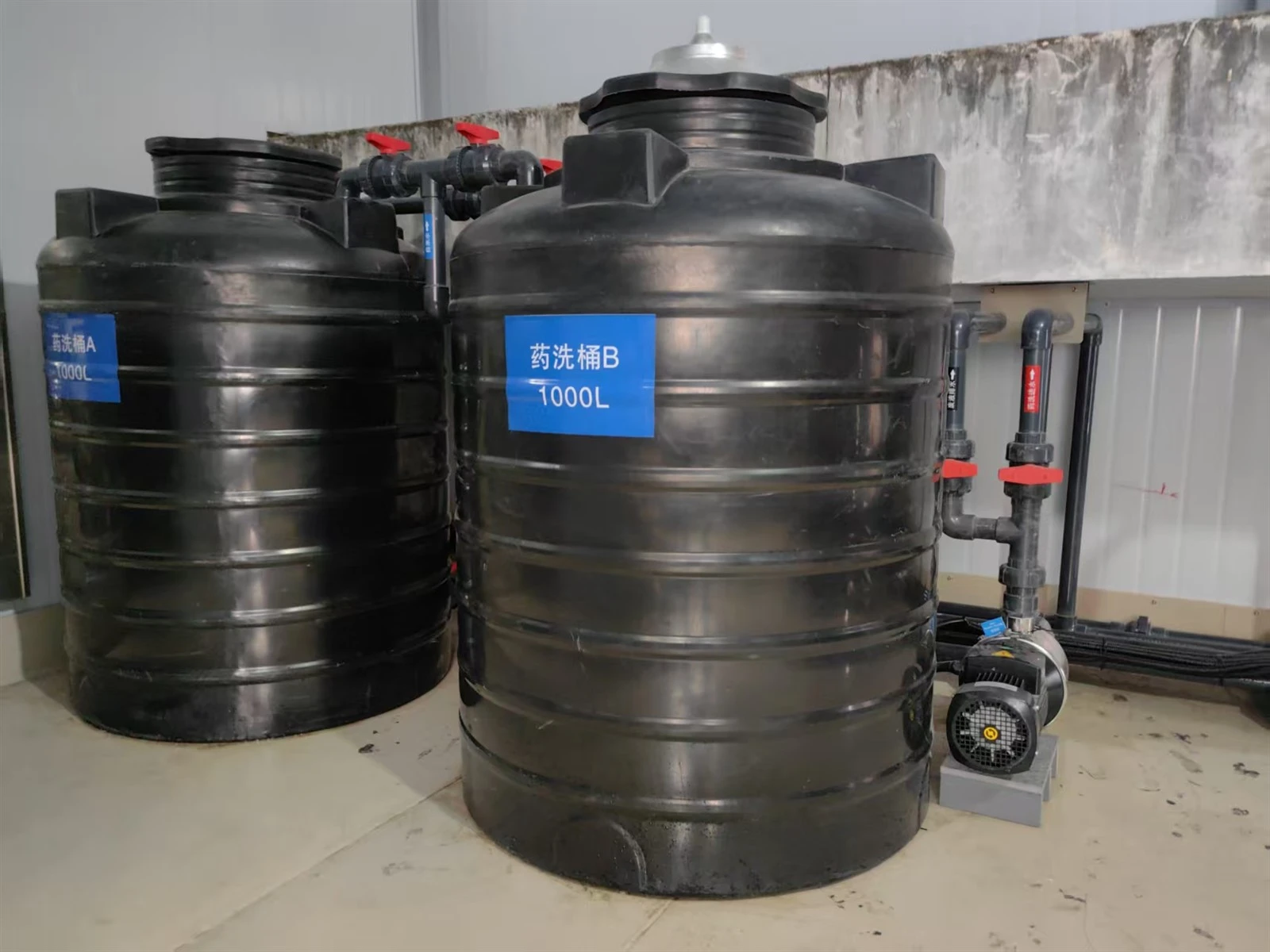
The chemical dosing system is also an important external component, mainly used to inject antiscalants, disinfectants, and pH adjusters into the feed water.
Antiscalants prevent scaling on the membrane surface, disinfectants control microbial contamination, and pH adjusters maintain suitable operating conditions for the membrane.
A complete dosing system typically consists of chemical storage tanks, metering pumps, and an automatic control system, ensuring long-term stable operation of the RO 8040 membrane through precise dosing control.
The stable operation of an RO 8040 system depends not only on the performance of the membrane element itself but also on the coordinated function of various supporting accessories.
From membrane housings and O-rings to connectors, instruments, and dosing systems, every component plays an irreplaceable role in the system.
Only with proper selection, correct installation, and standardized maintenance can the RO 8040 system maintain long-term efficient and stable performance while effectively extending its overall service life.